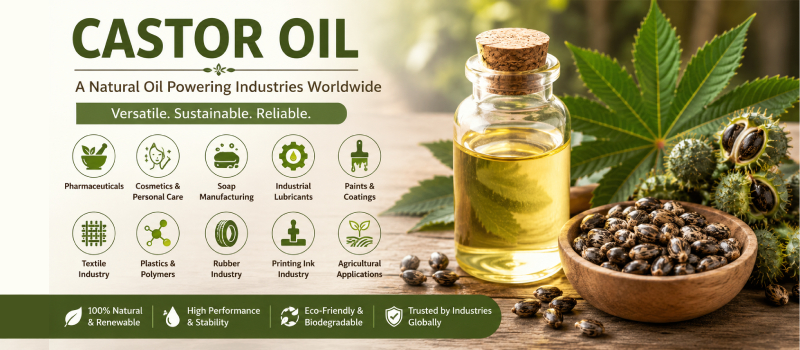
Castor oil has been a trusted natural ingredient for generations, valued for its versatility, reliability, and wide range of applications. Derived from the seeds of the castor plant (Ricinus communis), this vegetable oil has evolved from a traditional product into an essential raw material for numerous industries. Today, castor oil is used in pharmaceuticals, cosmetics, personal care products, lubricants, textiles, paints, coatings, plastics and specialty chemicals.
What makes castor oil unique is its high concentration of ricinoleic acid, a naturally occurring fatty acid that gives the oil exceptional lubricating, emulsifying, and moisturizing properties. These characteristics make it suitable for applications where performance, consistency, and sustainability are equally important.
As industries continue to seek renewable and environmentally responsible raw materials, Castor Oil Manufacturers remains one of the most preferred plant-based oils in the global market.
What is Castor Oil?
Castor oil is obtained by extracting oil from castor seeds. The extracted oil is then refined and processed according to its intended application. Depending on industry requirements, castor oil may be available in cold-pressed, refined, pale-pressed, or industrial grades.
Unlike many vegetable oils, castor oil possesses a distinctive chemical structure. Its high ricinoleic acid content gives it superior viscosity, excellent stability, and remarkable compatibility with a variety of formulations. These qualities have made castor oil a valuable ingredient across several manufacturing sectors.
Origin and Production of Castor Oil
The castor plant is cultivated in several countries, with India being one of the largest producers and exporters of castor oil worldwide. Favorable climatic conditions and extensive agricultural expertise have enabled India to become a leading supplier of high-quality Refined Castor Oil to international markets.
The production process generally includes:
- Harvesting mature castor seeds
- Cleaning and drying the seeds
- Mechanical pressing or solvent extraction
- Filtration and refining
- Quality testing and packaging
Each stage is carefully controlled to ensure the final product meets industry standards and customer specifications.
Key Properties of Castor Oil
The growing demand for castor oil can be attributed to its exceptional physical and chemical properties.
- High Viscosity: Castor oil maintains excellent lubricating performance under demanding operating conditions, making it suitable for industrial machinery and specialty lubricants.
- Excellent Moisture Retention: Its natural emollient properties help retain moisture, which is why it is widely used in skincare, haircare, and cosmetic products.
- Superior Stability: Castor oil demonstrates good resistance to oxidation and temperature variations, contributing to longer product life and reliable performance.
- Renewable and Biodegradable: As a plant-derived product, castor oil supports sustainable manufacturing practices and environmentally responsible production processes.
- Versatile Processing Characteristics: It blends effectively with various ingredients and chemicals, making it useful in a broad range of formulations.
Major Industrial Applications of Castor Oil
- Pharmaceutical Industry: Castor oil has long been used in pharmaceutical manufacturing due to its purity and functional properties. It serves as an important ingredient in numerous formulations and processing applications.
Common pharmaceutical uses include:
- Capsules
- Tablets
- Ointments
- Creams
- Medicinal preparations
- Drug delivery systems
Manufacturers value castor oil for its consistency and compatibility with pharmaceutical ingredients.
- Cosmetics and Personal Care Products : The beauty and personal care industry relies heavily on castor oil because of its conditioning and moisturizing characteristics.
It is commonly found in:
- Hair oils
- Shampoos
- Conditioners
- Skin creams
- Face serums
- Lip balms
- Lipsticks
- Body lotions
- Massage oils
- Beard care products
Its ability to enhance texture and improve product performance makes it a preferred ingredient in premium formulations.
- Soap Manufacturing: Castor oil is widely used in soap production to improve lather quality and provide a smoother feel during use.
Benefits in soap manufacturing include:
- Rich foam formation
- Improved cleansing performance
- Enhanced moisturizing properties
- Better texture and stability
Many handcrafted and specialty soaps incorporate castor oil as a key ingredient.
- Lubricants and Industrial Fluids: One of the most significant industrial applications of castor oil is in lubricant manufacturing.
Its properties make it suitable for:
- High-performance lubricants
- Hydraulic fluids
- Industrial greases
- Cutting oils
- Metalworking fluids
- Machinery lubrication
The oil's natural viscosity helps reduce friction and improve equipment efficiency.
- Paints and Coatings Industry: Castor oil plays an important role in the production of paints, coatings, varnishes, and protective finishes.
Manufacturers use castor oil because it contributes to:
- Improved flexibility
- Better adhesion
- Enhanced durability
- Surface protection
- Weather resistance
These characteristics make it valuable in both decorative and industrial coating applications.
- Textile Industry: The textile sector utilizes castor oil in various stages of fabric processing and finishing.
Applications include:
- Textile lubricants
- Fiber treatment
- Dyeing auxiliaries
- Finishing agents
- Softening formulations
Its performance helps improve processing efficiency and product quality.
- Plastic and Polymer Manufacturing: As industries move toward sustainable alternatives, castor oil has become increasingly important in polymer production.
It is used in manufacturing:
- Polyurethane products
- Specialty resins
- Bioplastics
- Adhesives
- Plasticizers
- Engineering polymers
These materials are used in automotive, construction, consumer goods, and industrial applications.
- Rubber Industry: Castor oil contributes to flexibility and processing efficiency in rubber manufacturing.
Common applications include:
- Industrial rubber products
- Automotive components
- Seals and gaskets
- Conveyor systems
- Specialty rubber compounds
Its compatibility with rubber formulations enhances overall product performance.
- Printing Ink Manufacturing: The printing industry utilizes castor oil for producing specialty inks and pigment dispersions.
Benefits include:
- Improved viscosity control
- Better flow properties
- Enhanced print quality
- Stable formulation performance
- Agricultural Applications: Agriculture remains another important sector where castor oil-based products are used.
Applications include:
- Crop protection formulations
- Agricultural processing aids
- Bio-based formulations
- Specialty farming products
Its natural origin makes it attractive for environmentally conscious agricultural solutions.
Castor Oil Derivatives and Their Importance
The value of castor oil extends beyond the base product. Through various processing methods, manufacturers produce a range of castor oil derivatives that serve specialized industries.
Important derivatives include:
- Hydrogenated Castor Oil: Used in cosmetics, coatings, lubricants, and industrial applications.
- Dehydrated Castor Oil: Widely utilized in paints, varnishes, and protective coatings.
- Sulphonated Castor Oil (Turkey Red Oil): Commonly used in textile processing and emulsification applications.
- Ricinoleic Acid: A key ingredient in chemical manufacturing and specialty formulations.
- Sebacic Acid: Used in nylon production, engineering plastics, and high-performance polymers.
- Castor Wax: Applied in cosmetics, polishes, coatings, and industrial products.
The demand for these derivatives continues to grow as industries seek reliable plant-based raw materials.
Why Manufacturers Prefer Castor Oil
Businesses across industries continue to choose castor oil for several reasons:
- Consistent Quality: Reliable performance helps maintain manufacturing standards and product consistency.
- Multiple Industrial Uses: A single raw material can serve various functions across different applications.
- Renewable Resource: Castor oil is derived from agricultural sources, making it a sustainable alternative to many petroleum-based products.
- Strong Global Availability: Established production and export networks ensure a dependable supply chain.
- Excellent Technical Performance: Its unique chemical structure delivers properties that are difficult to achieve with conventional vegetable oils.
Castor Oil and Sustainable Manufacturing
Sustainability has become a major consideration for modern industries. Companies are actively exploring renewable materials that reduce environmental impact while maintaining product quality.
Castor oil aligns well with these objectives because it is:
- Plant-based
- Renewable
- Biodegradable
- Versatile
- Suitable for multiple industries
Many manufacturers are incorporating castor oil and its derivatives into their products as part of their sustainability initiatives and long-term environmental goals.
India's Position in the Global Castor Oil Market
India plays a significant role in the international castor oil industry. The country is recognized for its extensive castor cultivation, advanced processing capabilities, and strong export infrastructure.
Indian manufacturers and exporters supply castor oil to customers across:
- North America
- Europe
- Asia-Pacific
- Middle East
- Africa
- South America
The combination of quality production standards and competitive pricing has helped Indian suppliers establish a strong presence in global markets.
Choosing the Right Castor Oil Supplier
When sourcing castor oil, businesses should consider several factors:
- Product quality and consistency
- Industry certifications
- Manufacturing capabilities
- Export experience
- Packaging options
- Supply reliability
- Technical support
- Quality assurance procedures
A dependable supplier can help ensure uninterrupted production and consistent product performance.